Screen Wellness
Screen Addiction: Causes, Symptoms, Effects & How to Overcome It
You reach for your phone within seconds of waking up. You check social media dozens of times daily without thinking. You feel anxious when separated from your device. Gaming sessions that should last an hour stretch into five. You've tried cutting back but can't seem to stop.
If this sounds familiar, you're not alone. Screen addiction affects millions worldwide, from children to adults, disrupting sleep, relationships, work, and mental health.
This comprehensive guide explores what screen addiction is, how to recognize it, why it happens, and evidence-based strategies to regain control of your digital life.

You reach for your phone within seconds of waking up. You check social media dozens of times daily without thinking. You feel anxious when separated from your device. Gaming sessions that should last an hour stretch into five. You've tried cutting back but can't seem to stop.
If this sounds familiar, you're not alone. Screen addiction affects millions worldwide, from children to adults, disrupting sleep, relationships, work, and mental health.
This comprehensive guide explores what screen addiction is, how to recognize it, why it happens, and evidence-based strategies to regain control of your digital life.
You reach for your phone within seconds of waking up. You check social media dozens of times daily without thinking. You feel anxious when separated from your device. Gaming sessions that should last an hour stretch into five. You've tried cutting back but can't seem to stop.
If this sounds familiar, you're not alone. Screen addiction affects millions worldwide, from children to adults, disrupting sleep, relationships, work, and mental health.
This comprehensive guide explores what screen addiction is, how to recognize it, why it happens, and evidence-based strategies to regain control of your digital life.


Do You Know Your Whole Life Screen Time ?
What I am going to cover
What Is Screen Addiction?
How Many Hours of Screen Time Is Considered Addiction?
Signs and Symptoms of Screen Addiction
Causes of Screen Addiction
Psychological and Physical Effects
Screen Addiction in Children and Teens
Is Screen Addiction a Real Medical Condition?
How to Reduce Screen Time Effectively
Treatment Options and Professional Help
What I am going to cover
What Is Screen Addiction?
How Many Hours of Screen Time Is Considered Addiction?
Signs and Symptoms of Screen Addiction
Causes of Screen Addiction
Psychological and Physical Effects
Screen Addiction in Children and Teens
Is Screen Addiction a Real Medical Condition?
How to Reduce Screen Time Effectively
Treatment Options and Professional Help
What I am going to cover
What Is Screen Addiction?
How Many Hours of Screen Time Is Considered Addiction?
Signs and Symptoms of Screen Addiction
Causes of Screen Addiction
Psychological and Physical Effects
Screen Addiction in Children and Teens
Is Screen Addiction a Real Medical Condition?
How to Reduce Screen Time Effectively
Treatment Options and Professional Help
What to remember
Screen addiction is characterized by compulsive device use that continues despite negative consequences, not just high usage hours.
Gaming disorder affects approximately 8% of adolescents globally and was officially recognized by the WHO in 2019 as a legitimate medical condition.
Americans average 5 hours and 16 minutes daily on phones alone, with nearly half reporting feeling addicted to their devices.
Addiction is defined by behavioral criteria, not time thresholds including loss of control, withdrawal symptoms, tolerance, and continued use despite harm.
Dopamine-driven reward systems make screens genuinely addictive with brain patterns similar to substance addiction, particularly in gaming disorder.
Children and teens are particularly vulnerable due to developing prefrontal cortex affecting impulse control, with rates of problematic use increasing from 7% in 2018 to 11% in 2022.
Mental health impacts include depression, anxiety, reduced attention span, and social isolation with bidirectional relationships where each condition worsens the other.
Physical effects include sleep disorders, obesity risk, digital eye strain, and musculoskeletal problems from sedentary behavior and poor posture.
Social media platforms are deliberately designed to be addictive using algorithms, infinite scrolling, and variable reward schedules to maximize engagement.
Effective reduction requires structured strategies including screen time tracking, clear boundaries, replacing screen time with alternative activities, and addressing underlying emotional issues.
Professional treatment options exist including Cognitive Behavioral Therapy (CBT), support groups, and family-based interventions for severe cases.
Prevention is easier than treatment emphasizing early establishment of healthy digital habits, modeling balanced behavior, and creating tech-free family rituals.
What to remember
Screen addiction is characterized by compulsive device use that continues despite negative consequences, not just high usage hours.
Gaming disorder affects approximately 8% of adolescents globally and was officially recognized by the WHO in 2019 as a legitimate medical condition.
Americans average 5 hours and 16 minutes daily on phones alone, with nearly half reporting feeling addicted to their devices.
Addiction is defined by behavioral criteria, not time thresholds including loss of control, withdrawal symptoms, tolerance, and continued use despite harm.
Dopamine-driven reward systems make screens genuinely addictive with brain patterns similar to substance addiction, particularly in gaming disorder.
Children and teens are particularly vulnerable due to developing prefrontal cortex affecting impulse control, with rates of problematic use increasing from 7% in 2018 to 11% in 2022.
Mental health impacts include depression, anxiety, reduced attention span, and social isolation with bidirectional relationships where each condition worsens the other.
Physical effects include sleep disorders, obesity risk, digital eye strain, and musculoskeletal problems from sedentary behavior and poor posture.
Social media platforms are deliberately designed to be addictive using algorithms, infinite scrolling, and variable reward schedules to maximize engagement.
Effective reduction requires structured strategies including screen time tracking, clear boundaries, replacing screen time with alternative activities, and addressing underlying emotional issues.
Professional treatment options exist including Cognitive Behavioral Therapy (CBT), support groups, and family-based interventions for severe cases.
Prevention is easier than treatment emphasizing early establishment of healthy digital habits, modeling balanced behavior, and creating tech-free family rituals.
What to remember
Screen addiction is characterized by compulsive device use that continues despite negative consequences, not just high usage hours.
Gaming disorder affects approximately 8% of adolescents globally and was officially recognized by the WHO in 2019 as a legitimate medical condition.
Americans average 5 hours and 16 minutes daily on phones alone, with nearly half reporting feeling addicted to their devices.
Addiction is defined by behavioral criteria, not time thresholds including loss of control, withdrawal symptoms, tolerance, and continued use despite harm.
Dopamine-driven reward systems make screens genuinely addictive with brain patterns similar to substance addiction, particularly in gaming disorder.
Children and teens are particularly vulnerable due to developing prefrontal cortex affecting impulse control, with rates of problematic use increasing from 7% in 2018 to 11% in 2022.
Mental health impacts include depression, anxiety, reduced attention span, and social isolation with bidirectional relationships where each condition worsens the other.
Physical effects include sleep disorders, obesity risk, digital eye strain, and musculoskeletal problems from sedentary behavior and poor posture.
Social media platforms are deliberately designed to be addictive using algorithms, infinite scrolling, and variable reward schedules to maximize engagement.
Effective reduction requires structured strategies including screen time tracking, clear boundaries, replacing screen time with alternative activities, and addressing underlying emotional issues.
Professional treatment options exist including Cognitive Behavioral Therapy (CBT), support groups, and family-based interventions for severe cases.
Prevention is easier than treatment emphasizing early establishment of healthy digital habits, modeling balanced behavior, and creating tech-free family rituals.
What Is Screen Addiction?
Screen addiction refers to compulsive and excessive use of digital devices smartphones, tablets, computers, and gaming consoles that interferes with daily functioning, relationships, and wellbeing despite negative consequences.
It's important to distinguish between heavy screen use and true addiction. Many people use screens extensively for work, education, or staying connected. This alone doesn't constitute addiction.
True addiction involves loss of control over usage despite wanting to stop, continued use despite harmful consequences, withdrawal symptoms when unable to access devices, tolerance requiring increasing amounts of screen time for satisfaction, neglect of other important activities and relationships, and using screens primarily to escape problems or regulate emotions.
Types of Screen Addiction
Social media addiction involves compulsive checking of platforms like Instagram, TikTok, Facebook, or X, driven by social validation and fear of missing out.
Gaming disorder, officially recognized by the World Health Organization in 2019, affects approximately 8% of adolescents globally, with rates as high as 10% in some regions.
Smartphone addiction characterized by constant checking, anxiety when separated from the device, and prioritizing phone use over face-to-face interaction.
Streaming addiction involves binge-watching shows or videos for hours, often disrupting sleep and responsibilities.
How Many Hours of Screen Time Is Considered Addiction?
There's no universal hour threshold that defines addiction. Recent surveys show Americans average 5 hours and 16 minutes daily on phones, with nearly half reporting feeling addicted.
However, addiction is defined by behavioral criteria, not just time spent. Two people might spend the same hours on screens, but only one experiences addiction if their use is compulsive and harmful.
Key indicators include inability to reduce usage despite wanting to, significant impairment in work, school, or relationships, withdrawal symptoms like anxiety or irritability when unable to access devices, and using screens to escape negative emotions or problems.
For children and teens, WHO data shows 11% exhibit problematic social media use, with 12% at risk for problematic gaming. These rates increased from 7% in 2018 to 11% in 2022, indicating growing concern.
Signs and Symptoms of Screen Addiction
Recognizing addiction requires looking at multiple dimensions of functioning.
Emotional Symptoms
Anxiety when separated from devices. Feeling panic, restlessness, or severe discomfort without access to your phone or computer.
Irritability and mood swings. Becoming angry or defensive when asked to reduce screen time or interrupted during use.
Using screens to regulate emotions. Automatically reaching for devices when bored, anxious, lonely, or stressed as primary coping mechanism.
Guilt and shame. Feeling bad about excessive use but unable to stop.

Behavioral Symptoms
Loss of control. Repeatedly unsuccessful attempts to cut back despite genuine desire to reduce usage.
Preoccupation. Constantly thinking about screens even when not using them, planning next gaming session or checking social media.
Neglect of responsibilities. Missing work or school deadlines, ignoring household tasks, or failing to meet commitments due to screen use.
Tolerance. Needing increasingly more screen time to feel satisfied or achieve the same level of engagement.
Withdrawal. Experiencing restlessness, anxiety, irritability, or physical discomfort when unable to use devices.
Continued use despite harm. Persisting with excessive screen time even after recognizing negative effects on health, relationships, or performance.
Physical Symptoms
Digital eye strain. Dry, irritated eyes, blurred vision, and headaches from prolonged screen exposure.
Sleep disruption. Difficulty falling asleep, poor sleep quality, and daytime fatigue from late-night screen use.
Posture problems. Neck pain, back pain, and repetitive strain injuries from hours in poor positions.
Reduced physical activity. Weight gain and decreased fitness from sedentary screen time replacing movement.
Causes of Screen Addiction
Understanding what drives compulsive screen use helps explain why it's so difficult to stop.
Dopamine and Reward Systems
Screens trigger dopamine release in the brain's reward system. Likes, messages, game achievements, and engaging content all activate these pathways, creating pleasure and reinforcing the behavior.
Research shows that gaming disorder involves abnormal activation of the prefrontal cortex, limbic system, and striatum, similar to patterns seen in substance addiction.

Social Validation Loops
Social media platforms create feedback loops where likes, comments, and shares provide immediate social validation. This intermittent reinforcement (unpredictable rewards) is particularly addictive.
Fear of Missing Out (FOMO)
Constant connectivity creates anxiety about missing important information, social events, or conversations happening online, driving compulsive checking.
Algorithm-Driven Engagement
Platforms use sophisticated algorithms designed to maximize time spent. Content feeds, autoplay features, and endless scrolling are deliberately engineered to be habit-forming.
Stress and Escapism
Many people turn to screens to escape stress, anxiety, or difficult emotions. Gaming, social media, and streaming provide temporary relief but don't address underlying issues, creating dependency.
Psychological and Physical Effects
Screen addiction carries serious consequences across multiple domains.
Mental Health Impact
Depression and anxiety. Studies show strong correlations between internet gaming addiction and both depression and anxiety, with bidirectional relationships where each condition worsens the other.
Reduced attention span. Constant switching between apps and rapid content consumption trains brains to expect continuous stimulation, making sustained focus difficult.
Social isolation. Despite being "connected" online, excessive screen users often experience loneliness and withdrawal from face-to-face relationships.
Poor emotional regulation. Over-reliance on screens for emotional management prevents development of healthy coping skills.
Physical Health Consequences
Sleep disorders. Blue light exposure suppresses melatonin, and engaging content keeps brains activated, resulting in insomnia and poor sleep quality.
Obesity risk. Systematic reviews reveal increased obesity rates in children with internet addiction or gaming disorder, along with disturbed eating patterns.
Eye problems. Digital eye strain, increased myopia rates, and other vision issues from prolonged close-up screen viewing.
Musculoskeletal problems. Chronic neck, back, and wrist pain from poor posture and repetitive movements.
Screen Addiction in Children and Teens
Young people are particularly vulnerable to screen addiction.
Brain Development Considerations
Adolescent brains are still developing, particularly the prefrontal cortex responsible for impulse control and decision-making. This makes teens more susceptible to addictive behaviors and less able to self-regulate.
Academic Performance Impact
Screen addiction correlates with declining grades, missed assignments, and reduced engagement in school. Gaming disorder particularly affects executive functioning, attention, and behavioral inhibition.
Behavioral Changes
Parents often notice increased irritability, mood swings, social withdrawal, loss of interest in previously enjoyed activities, and conflicts about device use.
Demographics
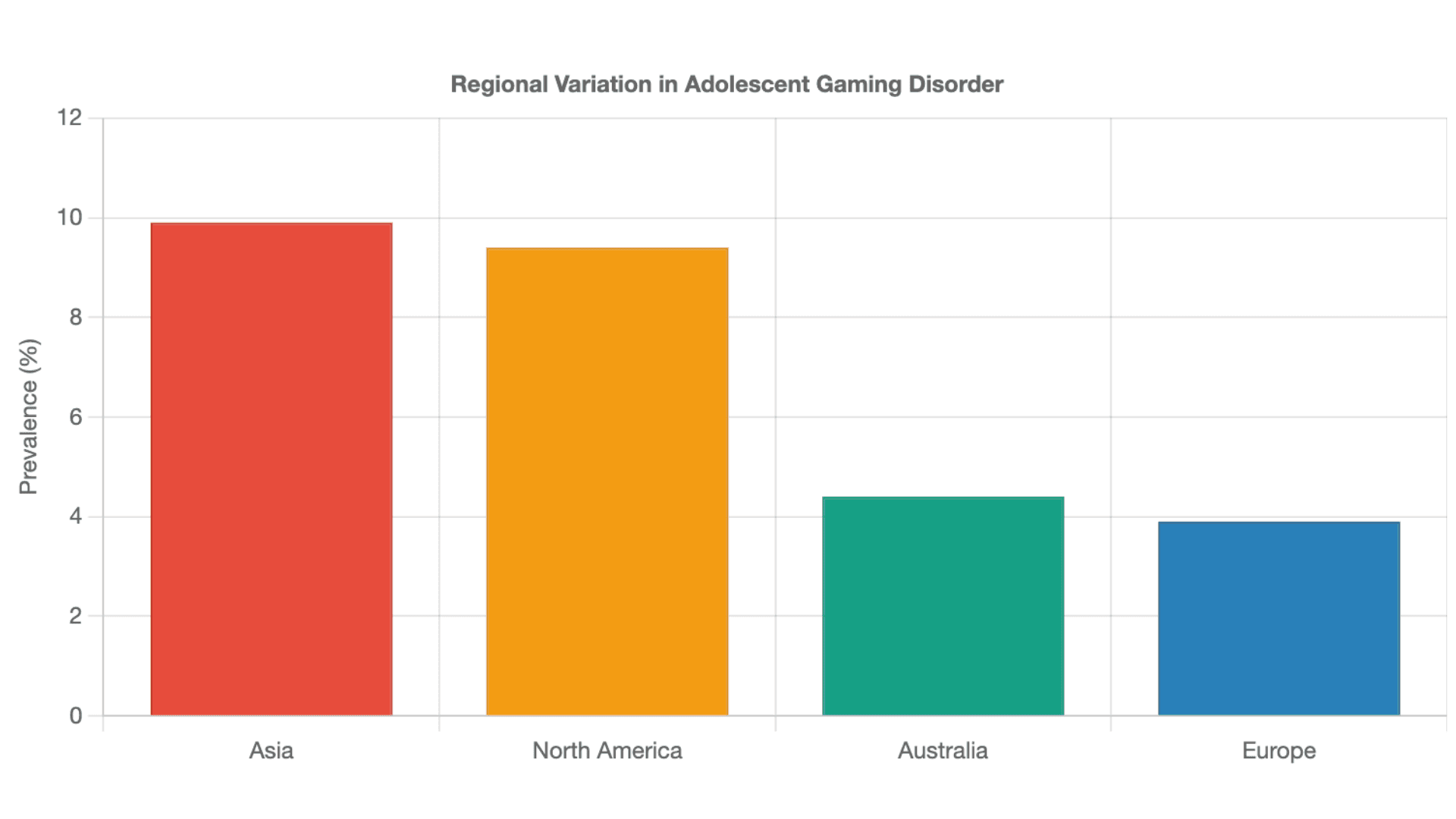
Global statistics show gaming disorder affects about 8% of adolescents worldwide, with significant regional variation: Asian countries report 9.9%, North America 9.4%, Australia 4.4%, and Europe 3.9%.
Gender differences are pronounced, with males showing gaming disorder rates of 14.6% compared to 6.2% for females in some studies.
Is Screen Addiction a Real Medical Condition?
The medical community increasingly recognizes certain forms of screen addiction as legitimate disorders.
Gaming Disorder was officially included in the WHO's ICD-11 in 2019, defined as a pattern of persistent gaming behavior that takes precedence over other life interests, causing significant impairment.
Internet Gaming Disorder is listed in the DSM-5-TR as a condition warranting further study, with diagnostic criteria including preoccupation, withdrawal, tolerance, unsuccessful attempts to control, and continued use despite problems.
Behavioral addictions are increasingly understood to share neurological mechanisms with substance addictions. Brain imaging studies show similar patterns of reward system dysregulation and impulse control deficits.
However, debate continues about whether all forms of excessive screen use should be classified as addictions or if terms like "problematic use" or "compulsive behavior" are more appropriate.
How to Reduce Screen Time Effectively
Overcoming screen addiction requires structured strategies and sustained effort.
Track Your Usage
Use built-in screen time tracking (iPhone Screen Time, Android Digital Wellbeing) to see actual usage. Awareness is the first step toward change.
Set Specific Limits
Establish clear boundaries: no screens during meals, one hour before bed, first hour after waking, or during face-to-face conversations. Use app limits and scheduled downtime to enforce these.
Replace, Don't Just Restrict
Plan alternative activities: physical exercise, outdoor time, reading, creative hobbies, face-to-face socializing. Screen reduction fails when nothing fills the void.
Create Physical Barriers
Charge devices outside bedrooms, delete problem apps from phones, use website blockers during work hours, and keep phones in bags during social events.
Practice Mindful Use
Before picking up your device, ask why. Use screens intentionally for specific purposes rather than automatically checking out of habit.
Digital Detox Periods
Schedule regular breaks: screen-free weekends, one month with dramatically reduced use, or specific hours daily without devices.
Address Underlying Issues
If you're using screens to escape stress, anxiety, or depression, work on developing healthier coping mechanisms or seek professional help for underlying conditions.
Treatment Options and Professional Help
Severe screen addiction often benefits from professional intervention.
Cognitive Behavioral Therapy (CBT)
CBT helps identify thought patterns driving compulsive use, develop healthier behaviors, challenge beliefs about needing constant connectivity, and build coping skills for managing urges.
Counseling and Support Groups
Individual therapy addresses underlying mental health issues. Support groups like Internet and Technology Addicts Anonymous or SMART Recovery provide peer support and structured recovery programs.

Family-Based Interventions
For children and teens, family therapy addresses household dynamics, helps parents set consistent boundaries, improves communication about technology use, and treats addiction as a family system issue.
When to Seek Help
Consider professional support if screen use feels completely out of control, addiction is severely impacting work, school, or relationships, you've tried self-help strategies without success, screen addiction co-occurs with depression, anxiety, or other mental health conditions, or physical health is deteriorating from excessive use.
What Is Screen Addiction?
Screen addiction refers to compulsive and excessive use of digital devices smartphones, tablets, computers, and gaming consoles that interferes with daily functioning, relationships, and wellbeing despite negative consequences.
It's important to distinguish between heavy screen use and true addiction. Many people use screens extensively for work, education, or staying connected. This alone doesn't constitute addiction.
True addiction involves loss of control over usage despite wanting to stop, continued use despite harmful consequences, withdrawal symptoms when unable to access devices, tolerance requiring increasing amounts of screen time for satisfaction, neglect of other important activities and relationships, and using screens primarily to escape problems or regulate emotions.
Types of Screen Addiction
Social media addiction involves compulsive checking of platforms like Instagram, TikTok, Facebook, or X, driven by social validation and fear of missing out.
Gaming disorder, officially recognized by the World Health Organization in 2019, affects approximately 8% of adolescents globally, with rates as high as 10% in some regions.
Smartphone addiction characterized by constant checking, anxiety when separated from the device, and prioritizing phone use over face-to-face interaction.
Streaming addiction involves binge-watching shows or videos for hours, often disrupting sleep and responsibilities.
How Many Hours of Screen Time Is Considered Addiction?
There's no universal hour threshold that defines addiction. Recent surveys show Americans average 5 hours and 16 minutes daily on phones, with nearly half reporting feeling addicted.
However, addiction is defined by behavioral criteria, not just time spent. Two people might spend the same hours on screens, but only one experiences addiction if their use is compulsive and harmful.
Key indicators include inability to reduce usage despite wanting to, significant impairment in work, school, or relationships, withdrawal symptoms like anxiety or irritability when unable to access devices, and using screens to escape negative emotions or problems.
For children and teens, WHO data shows 11% exhibit problematic social media use, with 12% at risk for problematic gaming. These rates increased from 7% in 2018 to 11% in 2022, indicating growing concern.
Signs and Symptoms of Screen Addiction
Recognizing addiction requires looking at multiple dimensions of functioning.
Emotional Symptoms
Anxiety when separated from devices. Feeling panic, restlessness, or severe discomfort without access to your phone or computer.
Irritability and mood swings. Becoming angry or defensive when asked to reduce screen time or interrupted during use.
Using screens to regulate emotions. Automatically reaching for devices when bored, anxious, lonely, or stressed as primary coping mechanism.
Guilt and shame. Feeling bad about excessive use but unable to stop.

Behavioral Symptoms
Loss of control. Repeatedly unsuccessful attempts to cut back despite genuine desire to reduce usage.
Preoccupation. Constantly thinking about screens even when not using them, planning next gaming session or checking social media.
Neglect of responsibilities. Missing work or school deadlines, ignoring household tasks, or failing to meet commitments due to screen use.
Tolerance. Needing increasingly more screen time to feel satisfied or achieve the same level of engagement.
Withdrawal. Experiencing restlessness, anxiety, irritability, or physical discomfort when unable to use devices.
Continued use despite harm. Persisting with excessive screen time even after recognizing negative effects on health, relationships, or performance.
Physical Symptoms
Digital eye strain. Dry, irritated eyes, blurred vision, and headaches from prolonged screen exposure.
Sleep disruption. Difficulty falling asleep, poor sleep quality, and daytime fatigue from late-night screen use.
Posture problems. Neck pain, back pain, and repetitive strain injuries from hours in poor positions.
Reduced physical activity. Weight gain and decreased fitness from sedentary screen time replacing movement.
Causes of Screen Addiction
Understanding what drives compulsive screen use helps explain why it's so difficult to stop.
Dopamine and Reward Systems
Screens trigger dopamine release in the brain's reward system. Likes, messages, game achievements, and engaging content all activate these pathways, creating pleasure and reinforcing the behavior.
Research shows that gaming disorder involves abnormal activation of the prefrontal cortex, limbic system, and striatum, similar to patterns seen in substance addiction.

Social Validation Loops
Social media platforms create feedback loops where likes, comments, and shares provide immediate social validation. This intermittent reinforcement (unpredictable rewards) is particularly addictive.
Fear of Missing Out (FOMO)
Constant connectivity creates anxiety about missing important information, social events, or conversations happening online, driving compulsive checking.
Algorithm-Driven Engagement
Platforms use sophisticated algorithms designed to maximize time spent. Content feeds, autoplay features, and endless scrolling are deliberately engineered to be habit-forming.
Stress and Escapism
Many people turn to screens to escape stress, anxiety, or difficult emotions. Gaming, social media, and streaming provide temporary relief but don't address underlying issues, creating dependency.
Psychological and Physical Effects
Screen addiction carries serious consequences across multiple domains.
Mental Health Impact
Depression and anxiety. Studies show strong correlations between internet gaming addiction and both depression and anxiety, with bidirectional relationships where each condition worsens the other.
Reduced attention span. Constant switching between apps and rapid content consumption trains brains to expect continuous stimulation, making sustained focus difficult.
Social isolation. Despite being "connected" online, excessive screen users often experience loneliness and withdrawal from face-to-face relationships.
Poor emotional regulation. Over-reliance on screens for emotional management prevents development of healthy coping skills.
Physical Health Consequences
Sleep disorders. Blue light exposure suppresses melatonin, and engaging content keeps brains activated, resulting in insomnia and poor sleep quality.
Obesity risk. Systematic reviews reveal increased obesity rates in children with internet addiction or gaming disorder, along with disturbed eating patterns.
Eye problems. Digital eye strain, increased myopia rates, and other vision issues from prolonged close-up screen viewing.
Musculoskeletal problems. Chronic neck, back, and wrist pain from poor posture and repetitive movements.
Screen Addiction in Children and Teens
Young people are particularly vulnerable to screen addiction.
Brain Development Considerations
Adolescent brains are still developing, particularly the prefrontal cortex responsible for impulse control and decision-making. This makes teens more susceptible to addictive behaviors and less able to self-regulate.
Academic Performance Impact
Screen addiction correlates with declining grades, missed assignments, and reduced engagement in school. Gaming disorder particularly affects executive functioning, attention, and behavioral inhibition.
Behavioral Changes
Parents often notice increased irritability, mood swings, social withdrawal, loss of interest in previously enjoyed activities, and conflicts about device use.
Demographics
Global statistics show gaming disorder affects about 8% of adolescents worldwide, with significant regional variation: Asian countries report 9.9%, North America 9.4%, Australia 4.4%, and Europe 3.9%.

Gender differences are pronounced, with males showing gaming disorder rates of 14.6% compared to 6.2% for females in some studies.
Is Screen Addiction a Real Medical Condition?
The medical community increasingly recognizes certain forms of screen addiction as legitimate disorders.
Gaming Disorder was officially included in the WHO's ICD-11 in 2019, defined as a pattern of persistent gaming behavior that takes precedence over other life interests, causing significant impairment.
Internet Gaming Disorder is listed in the DSM-5-TR as a condition warranting further study, with diagnostic criteria including preoccupation, withdrawal, tolerance, unsuccessful attempts to control, and continued use despite problems.
Behavioral addictions are increasingly understood to share neurological mechanisms with substance addictions. Brain imaging studies show similar patterns of reward system dysregulation and impulse control deficits.
However, debate continues about whether all forms of excessive screen use should be classified as addictions or if terms like "problematic use" or "compulsive behavior" are more appropriate.
How to Reduce Screen Time Effectively
Overcoming screen addiction requires structured strategies and sustained effort.
Track Your Usage
Use built-in screen time tracking (iPhone Screen Time, Android Digital Wellbeing) to see actual usage. Awareness is the first step toward change.
Set Specific Limits
Establish clear boundaries: no screens during meals, one hour before bed, first hour after waking, or during face-to-face conversations. Use app limits and scheduled downtime to enforce these.
Replace, Don't Just Restrict
Plan alternative activities: physical exercise, outdoor time, reading, creative hobbies, face-to-face socializing. Screen reduction fails when nothing fills the void.
Create Physical Barriers
Charge devices outside bedrooms, delete problem apps from phones, use website blockers during work hours, and keep phones in bags during social events.
Practice Mindful Use
Before picking up your device, ask why. Use screens intentionally for specific purposes rather than automatically checking out of habit.
Digital Detox Periods
Schedule regular breaks: screen-free weekends, one month with dramatically reduced use, or specific hours daily without devices.
Address Underlying Issues
If you're using screens to escape stress, anxiety, or depression, work on developing healthier coping mechanisms or seek professional help for underlying conditions.
Treatment Options and Professional Help
Severe screen addiction often benefits from professional intervention.
Cognitive Behavioral Therapy (CBT)
CBT helps identify thought patterns driving compulsive use, develop healthier behaviors, challenge beliefs about needing constant connectivity, and build coping skills for managing urges.
Counseling and Support Groups
Individual therapy addresses underlying mental health issues. Support groups like Internet and Technology Addicts Anonymous or SMART Recovery provide peer support and structured recovery programs.

Family-Based Interventions
For children and teens, family therapy addresses household dynamics, helps parents set consistent boundaries, improves communication about technology use, and treats addiction as a family system issue.
When to Seek Help
Consider professional support if screen use feels completely out of control, addiction is severely impacting work, school, or relationships, you've tried self-help strategies without success, screen addiction co-occurs with depression, anxiety, or other mental health conditions, or physical health is deteriorating from excessive use.
What Is Screen Addiction?
Screen addiction refers to compulsive and excessive use of digital devices smartphones, tablets, computers, and gaming consoles that interferes with daily functioning, relationships, and wellbeing despite negative consequences.
It's important to distinguish between heavy screen use and true addiction. Many people use screens extensively for work, education, or staying connected. This alone doesn't constitute addiction.
True addiction involves loss of control over usage despite wanting to stop, continued use despite harmful consequences, withdrawal symptoms when unable to access devices, tolerance requiring increasing amounts of screen time for satisfaction, neglect of other important activities and relationships, and using screens primarily to escape problems or regulate emotions.
Types of Screen Addiction
Social media addiction involves compulsive checking of platforms like Instagram, TikTok, Facebook, or X, driven by social validation and fear of missing out.
Gaming disorder, officially recognized by the World Health Organization in 2019, affects approximately 8% of adolescents globally, with rates as high as 10% in some regions.
Smartphone addiction characterized by constant checking, anxiety when separated from the device, and prioritizing phone use over face-to-face interaction.
Streaming addiction involves binge-watching shows or videos for hours, often disrupting sleep and responsibilities.
How Many Hours of Screen Time Is Considered Addiction?
There's no universal hour threshold that defines addiction. Recent surveys show Americans average 5 hours and 16 minutes daily on phones, with nearly half reporting feeling addicted.
However, addiction is defined by behavioral criteria, not just time spent. Two people might spend the same hours on screens, but only one experiences addiction if their use is compulsive and harmful.
Key indicators include inability to reduce usage despite wanting to, significant impairment in work, school, or relationships, withdrawal symptoms like anxiety or irritability when unable to access devices, and using screens to escape negative emotions or problems.
For children and teens, WHO data shows 11% exhibit problematic social media use, with 12% at risk for problematic gaming. These rates increased from 7% in 2018 to 11% in 2022, indicating growing concern.
Signs and Symptoms of Screen Addiction
Recognizing addiction requires looking at multiple dimensions of functioning.
Emotional Symptoms
Anxiety when separated from devices. Feeling panic, restlessness, or severe discomfort without access to your phone or computer.
Irritability and mood swings. Becoming angry or defensive when asked to reduce screen time or interrupted during use.
Using screens to regulate emotions. Automatically reaching for devices when bored, anxious, lonely, or stressed as primary coping mechanism.
Guilt and shame. Feeling bad about excessive use but unable to stop.

Behavioral Symptoms
Loss of control. Repeatedly unsuccessful attempts to cut back despite genuine desire to reduce usage.
Preoccupation. Constantly thinking about screens even when not using them, planning next gaming session or checking social media.
Neglect of responsibilities. Missing work or school deadlines, ignoring household tasks, or failing to meet commitments due to screen use.
Tolerance. Needing increasingly more screen time to feel satisfied or achieve the same level of engagement.
Withdrawal. Experiencing restlessness, anxiety, irritability, or physical discomfort when unable to use devices.
Continued use despite harm. Persisting with excessive screen time even after recognizing negative effects on health, relationships, or performance.
Physical Symptoms
Digital eye strain. Dry, irritated eyes, blurred vision, and headaches from prolonged screen exposure.
Sleep disruption. Difficulty falling asleep, poor sleep quality, and daytime fatigue from late-night screen use.
Posture problems. Neck pain, back pain, and repetitive strain injuries from hours in poor positions.
Reduced physical activity. Weight gain and decreased fitness from sedentary screen time replacing movement.
Causes of Screen Addiction
Understanding what drives compulsive screen use helps explain why it's so difficult to stop.
Dopamine and Reward Systems
Screens trigger dopamine release in the brain's reward system. Likes, messages, game achievements, and engaging content all activate these pathways, creating pleasure and reinforcing the behavior.
Research shows that gaming disorder involves abnormal activation of the prefrontal cortex, limbic system, and striatum, similar to patterns seen in substance addiction.

Social Validation Loops
Social media platforms create feedback loops where likes, comments, and shares provide immediate social validation. This intermittent reinforcement (unpredictable rewards) is particularly addictive.
Fear of Missing Out (FOMO)
Constant connectivity creates anxiety about missing important information, social events, or conversations happening online, driving compulsive checking.
Algorithm-Driven Engagement
Platforms use sophisticated algorithms designed to maximize time spent. Content feeds, autoplay features, and endless scrolling are deliberately engineered to be habit-forming.
Stress and Escapism
Many people turn to screens to escape stress, anxiety, or difficult emotions. Gaming, social media, and streaming provide temporary relief but don't address underlying issues, creating dependency.
Psychological and Physical Effects
Screen addiction carries serious consequences across multiple domains.
Mental Health Impact
Depression and anxiety. Studies show strong correlations between internet gaming addiction and both depression and anxiety, with bidirectional relationships where each condition worsens the other.
Reduced attention span. Constant switching between apps and rapid content consumption trains brains to expect continuous stimulation, making sustained focus difficult.
Social isolation. Despite being "connected" online, excessive screen users often experience loneliness and withdrawal from face-to-face relationships.
Poor emotional regulation. Over-reliance on screens for emotional management prevents development of healthy coping skills.
Physical Health Consequences
Sleep disorders. Blue light exposure suppresses melatonin, and engaging content keeps brains activated, resulting in insomnia and poor sleep quality.
Obesity risk. Systematic reviews reveal increased obesity rates in children with internet addiction or gaming disorder, along with disturbed eating patterns.
Eye problems. Digital eye strain, increased myopia rates, and other vision issues from prolonged close-up screen viewing.
Musculoskeletal problems. Chronic neck, back, and wrist pain from poor posture and repetitive movements.
Screen Addiction in Children and Teens
Young people are particularly vulnerable to screen addiction.
Brain Development Considerations
Adolescent brains are still developing, particularly the prefrontal cortex responsible for impulse control and decision-making. This makes teens more susceptible to addictive behaviors and less able to self-regulate.
Academic Performance Impact
Screen addiction correlates with declining grades, missed assignments, and reduced engagement in school. Gaming disorder particularly affects executive functioning, attention, and behavioral inhibition.
Behavioral Changes
Parents often notice increased irritability, mood swings, social withdrawal, loss of interest in previously enjoyed activities, and conflicts about device use.
Demographics
Global statistics show gaming disorder affects about 8% of adolescents worldwide, with significant regional variation: Asian countries report 9.9%, North America 9.4%, Australia 4.4%, and Europe 3.9%.

Gender differences are pronounced, with males showing gaming disorder rates of 14.6% compared to 6.2% for females in some studies.
Is Screen Addiction a Real Medical Condition?
The medical community increasingly recognizes certain forms of screen addiction as legitimate disorders.
Gaming Disorder was officially included in the WHO's ICD-11 in 2019, defined as a pattern of persistent gaming behavior that takes precedence over other life interests, causing significant impairment.
Internet Gaming Disorder is listed in the DSM-5-TR as a condition warranting further study, with diagnostic criteria including preoccupation, withdrawal, tolerance, unsuccessful attempts to control, and continued use despite problems.
Behavioral addictions are increasingly understood to share neurological mechanisms with substance addictions. Brain imaging studies show similar patterns of reward system dysregulation and impulse control deficits.
However, debate continues about whether all forms of excessive screen use should be classified as addictions or if terms like "problematic use" or "compulsive behavior" are more appropriate.
How to Reduce Screen Time Effectively
Overcoming screen addiction requires structured strategies and sustained effort.
Track Your Usage
Use built-in screen time tracking (iPhone Screen Time, Android Digital Wellbeing) to see actual usage. Awareness is the first step toward change.
Set Specific Limits
Establish clear boundaries: no screens during meals, one hour before bed, first hour after waking, or during face-to-face conversations. Use app limits and scheduled downtime to enforce these.
Replace, Don't Just Restrict
Plan alternative activities: physical exercise, outdoor time, reading, creative hobbies, face-to-face socializing. Screen reduction fails when nothing fills the void.
Create Physical Barriers
Charge devices outside bedrooms, delete problem apps from phones, use website blockers during work hours, and keep phones in bags during social events.
Practice Mindful Use
Before picking up your device, ask why. Use screens intentionally for specific purposes rather than automatically checking out of habit.
Digital Detox Periods
Schedule regular breaks: screen-free weekends, one month with dramatically reduced use, or specific hours daily without devices.
Address Underlying Issues
If you're using screens to escape stress, anxiety, or depression, work on developing healthier coping mechanisms or seek professional help for underlying conditions.
Treatment Options and Professional Help
Severe screen addiction often benefits from professional intervention.
Cognitive Behavioral Therapy (CBT)
CBT helps identify thought patterns driving compulsive use, develop healthier behaviors, challenge beliefs about needing constant connectivity, and build coping skills for managing urges.
Counseling and Support Groups
Individual therapy addresses underlying mental health issues. Support groups like Internet and Technology Addicts Anonymous or SMART Recovery provide peer support and structured recovery programs.

Family-Based Interventions
For children and teens, family therapy addresses household dynamics, helps parents set consistent boundaries, improves communication about technology use, and treats addiction as a family system issue.
When to Seek Help
Consider professional support if screen use feels completely out of control, addiction is severely impacting work, school, or relationships, you've tried self-help strategies without success, screen addiction co-occurs with depression, anxiety, or other mental health conditions, or physical health is deteriorating from excessive use.
You are not the only one asking this
Is screen addiction the same as internet addiction?
Screen addiction is a broader term encompassing all excessive device use, including smartphones, tablets, gaming consoles, and computers. Internet addiction specifically refers to compulsive internet use regardless of device. They overlap significantly but aren't identical. Someone might be addicted to mobile gaming without problematic internet browsing, or vice versa. Both involve similar psychological mechanisms and behavioral patterns, with the WHO recognizing gaming disorder specifically while broader internet addiction remains under study.
How do I know if I am addicted to my phone?
Key indicators include feeling anxious or irritable when separated from your phone, checking it constantly (many times per hour), unsuccessful attempts to reduce usage, using your phone during inappropriate times like driving or important conversations, neglecting responsibilities or relationships for phone use, and relying on your phone primarily to escape negative emotions. If your phone use significantly interferes with work, relationships, sleep, or wellbeing despite knowing it's problematic, and you feel unable to control it, addiction is likely.
Can screen addiction cause depression?
The relationship is bidirectional and complex. Excessive screen use, particularly social media, can contribute to depression through social comparison, reduced face-to-face interaction, disrupted sleep, and decreased physical activity. However, people experiencing depression also tend to increase screen use for comfort or distraction, worsening the condition. Research shows strong correlations between gaming disorder and depression, suggesting shared vulnerabilities. Screen addiction doesn't necessarily cause depression, but it's a significant risk factor that can trigger or worsen mood disorders.
How many hours of screen time is healthy for adults?
While no universal standard exists for adults, research suggests limiting recreational screen time to 2 to 4 hours daily outside of work-related use. Americans currently average 5 hours 16 minutes daily on phones alone, with many reporting addiction. What matters most isn't just hours but functional impact: if screen time disrupts sleep (especially before bed), replaces physical activity, damages relationships, or impairs work performance, it's too much regardless of duration. Focus on quality over quantity, using screens intentionally rather than compulsively.
How can parents reduce their child's screen addiction?
Start with open conversations about why limits exist rather than just imposing rules. Set clear, consistent boundaries including screen-free times (meals, homework, bedtime) and zones (bedrooms, dining areas). Use parental controls and screen time management tools built into devices. Model healthy behavior by following the same rules. Provide engaging alternatives like outdoor activities, hobbies, and family time. Address underlying issues if screens serve as emotional escape. For severe cases, seek family therapy. Make changes gradual rather than sudden, and involve children in creating reasonable limits they can follow.
Are social media platforms designed to be addictive?
Yes. Social media platforms use sophisticated algorithms and design features specifically engineered to maximize engagement and time spent. These include infinite scrolling, autoplay videos, variable reward schedules (likes and notifications), FOMO-inducing features, and content personalization that shows increasingly engaging material. The business model requires keeping users on platforms as long as possible to serve more ads. Former tech insiders have confirmed these deliberate design choices. Understanding this manipulation helps users recognize when they're being psychologically engineered to keep scrolling and enables more conscious resistance.
You are not the only one asking this
Is screen addiction the same as internet addiction?
Screen addiction is a broader term encompassing all excessive device use, including smartphones, tablets, gaming consoles, and computers. Internet addiction specifically refers to compulsive internet use regardless of device. They overlap significantly but aren't identical. Someone might be addicted to mobile gaming without problematic internet browsing, or vice versa. Both involve similar psychological mechanisms and behavioral patterns, with the WHO recognizing gaming disorder specifically while broader internet addiction remains under study.
How do I know if I am addicted to my phone?
Key indicators include feeling anxious or irritable when separated from your phone, checking it constantly (many times per hour), unsuccessful attempts to reduce usage, using your phone during inappropriate times like driving or important conversations, neglecting responsibilities or relationships for phone use, and relying on your phone primarily to escape negative emotions. If your phone use significantly interferes with work, relationships, sleep, or wellbeing despite knowing it's problematic, and you feel unable to control it, addiction is likely.
Can screen addiction cause depression?
The relationship is bidirectional and complex. Excessive screen use, particularly social media, can contribute to depression through social comparison, reduced face-to-face interaction, disrupted sleep, and decreased physical activity. However, people experiencing depression also tend to increase screen use for comfort or distraction, worsening the condition. Research shows strong correlations between gaming disorder and depression, suggesting shared vulnerabilities. Screen addiction doesn't necessarily cause depression, but it's a significant risk factor that can trigger or worsen mood disorders.
How many hours of screen time is healthy for adults?
While no universal standard exists for adults, research suggests limiting recreational screen time to 2 to 4 hours daily outside of work-related use. Americans currently average 5 hours 16 minutes daily on phones alone, with many reporting addiction. What matters most isn't just hours but functional impact: if screen time disrupts sleep (especially before bed), replaces physical activity, damages relationships, or impairs work performance, it's too much regardless of duration. Focus on quality over quantity, using screens intentionally rather than compulsively.
How can parents reduce their child's screen addiction?
Start with open conversations about why limits exist rather than just imposing rules. Set clear, consistent boundaries including screen-free times (meals, homework, bedtime) and zones (bedrooms, dining areas). Use parental controls and screen time management tools built into devices. Model healthy behavior by following the same rules. Provide engaging alternatives like outdoor activities, hobbies, and family time. Address underlying issues if screens serve as emotional escape. For severe cases, seek family therapy. Make changes gradual rather than sudden, and involve children in creating reasonable limits they can follow.
Are social media platforms designed to be addictive?
Yes. Social media platforms use sophisticated algorithms and design features specifically engineered to maximize engagement and time spent. These include infinite scrolling, autoplay videos, variable reward schedules (likes and notifications), FOMO-inducing features, and content personalization that shows increasingly engaging material. The business model requires keeping users on platforms as long as possible to serve more ads. Former tech insiders have confirmed these deliberate design choices. Understanding this manipulation helps users recognize when they're being psychologically engineered to keep scrolling and enables more conscious resistance.
You are not the only one asking this
Is screen addiction the same as internet addiction?
Screen addiction is a broader term encompassing all excessive device use, including smartphones, tablets, gaming consoles, and computers. Internet addiction specifically refers to compulsive internet use regardless of device. They overlap significantly but aren't identical. Someone might be addicted to mobile gaming without problematic internet browsing, or vice versa. Both involve similar psychological mechanisms and behavioral patterns, with the WHO recognizing gaming disorder specifically while broader internet addiction remains under study.
How do I know if I am addicted to my phone?
Key indicators include feeling anxious or irritable when separated from your phone, checking it constantly (many times per hour), unsuccessful attempts to reduce usage, using your phone during inappropriate times like driving or important conversations, neglecting responsibilities or relationships for phone use, and relying on your phone primarily to escape negative emotions. If your phone use significantly interferes with work, relationships, sleep, or wellbeing despite knowing it's problematic, and you feel unable to control it, addiction is likely.
Can screen addiction cause depression?
The relationship is bidirectional and complex. Excessive screen use, particularly social media, can contribute to depression through social comparison, reduced face-to-face interaction, disrupted sleep, and decreased physical activity. However, people experiencing depression also tend to increase screen use for comfort or distraction, worsening the condition. Research shows strong correlations between gaming disorder and depression, suggesting shared vulnerabilities. Screen addiction doesn't necessarily cause depression, but it's a significant risk factor that can trigger or worsen mood disorders.
How many hours of screen time is healthy for adults?
While no universal standard exists for adults, research suggests limiting recreational screen time to 2 to 4 hours daily outside of work-related use. Americans currently average 5 hours 16 minutes daily on phones alone, with many reporting addiction. What matters most isn't just hours but functional impact: if screen time disrupts sleep (especially before bed), replaces physical activity, damages relationships, or impairs work performance, it's too much regardless of duration. Focus on quality over quantity, using screens intentionally rather than compulsively.
How can parents reduce their child's screen addiction?
Start with open conversations about why limits exist rather than just imposing rules. Set clear, consistent boundaries including screen-free times (meals, homework, bedtime) and zones (bedrooms, dining areas). Use parental controls and screen time management tools built into devices. Model healthy behavior by following the same rules. Provide engaging alternatives like outdoor activities, hobbies, and family time. Address underlying issues if screens serve as emotional escape. For severe cases, seek family therapy. Make changes gradual rather than sudden, and involve children in creating reasonable limits they can follow.
Are social media platforms designed to be addictive?
Yes. Social media platforms use sophisticated algorithms and design features specifically engineered to maximize engagement and time spent. These include infinite scrolling, autoplay videos, variable reward schedules (likes and notifications), FOMO-inducing features, and content personalization that shows increasingly engaging material. The business model requires keeping users on platforms as long as possible to serve more ads. Former tech insiders have confirmed these deliberate design choices. Understanding this manipulation helps users recognize when they're being psychologically engineered to keep scrolling and enables more conscious resistance.
Prevention is easier than treatment.
Start early with children. Establish healthy digital habits from the beginning rather than trying to correct problematic patterns later.
Model healthy behavior. Children imitate what they see. Adults must demonstrate balanced screen use.
Create tech-free family rituals. Regular screen-free meals, activities, and spaces make unplugging normal rather than exceptional.
Educate about design. Understanding how platforms are engineered to be addictive helps people recognize and resist manipulation.
Prioritize real-world activities. Ensure regular physical activity, outdoor time, face-to-face socializing, and creative pursuits that provide fulfillment without screens.
Regular check-ins. Periodically assess screen habits and adjust boundaries as needed. What works at one life stage may need modification later.
Prevention is easier than treatment.
Start early with children. Establish healthy digital habits from the beginning rather than trying to correct problematic patterns later.
Model healthy behavior. Children imitate what they see. Adults must demonstrate balanced screen use.
Create tech-free family rituals. Regular screen-free meals, activities, and spaces make unplugging normal rather than exceptional.
Educate about design. Understanding how platforms are engineered to be addictive helps people recognize and resist manipulation.
Prioritize real-world activities. Ensure regular physical activity, outdoor time, face-to-face socializing, and creative pursuits that provide fulfillment without screens.
Regular check-ins. Periodically assess screen habits and adjust boundaries as needed. What works at one life stage may need modification later.
Prevention is easier than treatment.
Start early with children. Establish healthy digital habits from the beginning rather than trying to correct problematic patterns later.
Model healthy behavior. Children imitate what they see. Adults must demonstrate balanced screen use.
Create tech-free family rituals. Regular screen-free meals, activities, and spaces make unplugging normal rather than exceptional.
Educate about design. Understanding how platforms are engineered to be addictive helps people recognize and resist manipulation.
Prioritize real-world activities. Ensure regular physical activity, outdoor time, face-to-face socializing, and creative pursuits that provide fulfillment without screens.
Regular check-ins. Periodically assess screen habits and adjust boundaries as needed. What works at one life stage may need modification later.
Did You Learn Something Today?
Stay in the loop.
Tiny useful tips sent with zero pressure and zero noise.